
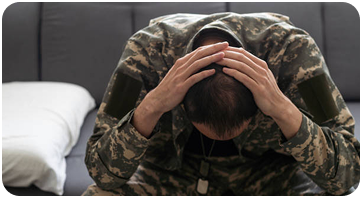
Survival in a War-Torn World: How Trauma Shapes a Soldier’s Identity
War is often described in terms of strategy, courage, and sacrifice. But in Crucified On Main Street: The Journal of Tarkus King by Wayne Paul Chapman, war is something far more intimate and unsettling. It is not just a battlefield experience. A force reshapes identity from the inside out. Through the eyes of its narrator, the book shows how survival in a war-torn world is not only about staying alive, but about enduring what that survival does to the human mind.
The Collapse of Purpose in Combat
At the beginning of a soldier’s journey, there is usually a sense of purpose. Training provides structure. Orders provide clarity. There is a belief, however fragile, that the mission has meaning. But as Wayne Paul Chapman illustrates in Crucified On Main Street, that sense of purpose begins to unravel the moment reality intrudes. The battlefield is not clean or logical. It is chaotic, brutal, and deeply personal.
Moments that were meant to be simple become morally complex. A soldier trained to eliminate threats suddenly finds himself holding the hand of a dying enemy. That shift is profound. It breaks the illusion that war is just about sides. Instead, it becomes about people. And once that realization takes hold, it is impossible to return to the simplicity of training.
Trauma as a Slow Transformation
In Crucified On Main Street, Wayne Paul Chapman does not present trauma as a single, explosive event. Instead, it unfolds gradually. It builds through repeated exposure to violence, loss, and fear. The narrator is not undone by one moment, but by many small ones that accumulate over time.
A photograph found on a battlefield. The sound of a final breath. The sight of innocent lives destroyed. These details linger. They repeat in the mind long after the moment has passed. Trauma, in this sense, becomes less about what happens and more about what refuses to leave. It alters perception, reshapes memory, and slowly changes how a soldier understands the world.
Numbness as a Survival Mechanism
One of the most striking aspects of Wayne Paul Chapman’s portrayal is how soldiers adapt emotionally. In Crucified On Main Street, the narrator does not remain in a constant state of shock. Instead, he becomes numb. What once horrified him begins to feel routine.
This numbness is not a sign of indifference. It is a form of survival. In a setting where violence is constant, emotional detachment becomes necessary. Without it, functioning would be impossible. But this coping mechanism comes at a cost. The same numbness that protects a soldier in war can isolate them from their own humanity.
Over time, the line between feeling and not feeling becomes blurred. And once that line fades, it becomes difficult to reconnect with the emotions that once defined them.
The Weight of Moral Conflict
Wayne Paul Chapman’s Crucified On Main Street captures the deep moral confusion that defines life in combat. Soldiers are not just fighting external enemies. They are also confronting internal questions that have no easy answers.
Why are we here?
What are we actually accomplishing?
Are we protecting life, or contributing to its destruction?
These questions do not have resolutions. Instead, they linger. The narrator continues to act, to follow orders, to survive. But internally, there is a growing divide between action and belief. This tension becomes a defining part of his identity. He is no longer just a soldier. He is someone caught between what he does and what he feels about it.
Isolation in Shared Experience
Ironically, even in the presence of others, soldiers in Crucified On Main Street experience a deep sense of isolation. Wayne Paul Chapman shows that shared trauma does not always lead to shared understanding. Each processes their experiences differently. Some withdraw. Others remain silent.
There are moments of connection, but they are often brief and unspoken. The weight of what has been seen and felt is too heavy, too complex to articulate easily. As a result, soldiers carry their burdens alone, even when surrounded by those who have witnessed the same horrors.
This isolation extends beyond the battlefield. It shapes relationships, making it difficult to reconnect with people who have not experienced the same reality.
Holding Onto Humanity in the Midst of Chaos
Despite the overwhelming darkness, Wayne Paul Chapman also highlights something else in Crucified On Main Street: the struggle to hold onto humanity. Small acts take on enormous significance. A moment of compassion. A decision to show dignity to the dead. A memory that reminds the soldier of a world beyond violence.
These moments are fragile, but they matter. They represent resistance against the dehumanizing force of war. They show that even in the worst conditions, a part of the soldier still refuses to disappear.
However, maintaining that connection is not easy. War constantly pushes against it, testing how much a person can endure before humanity begins to fade.
A New Identity Forged by War
By the end of the journey depicted in Crucified On Main Street, the transformation is undeniable. Wayne Paul Chapman does not present a simple arc of growth or redemption. Instead, he presents something more complex and more honest.
The soldier who emerges is not the same as the one who entered. He carries the weight of everything he has seen and done. A single role no longer defines his identity; rather, it is a collection of experiences that include fear, guilt, compassion, and survival.
Even the soldier himself does not easily understand this new identity. It exists in contradiction. Strength alongside vulnerability. Detachment alongside longing for connection. Survival alongside loss.
Conclusion
Crucified on Main Street: The Journal of Tarkus King by Wayne Paul Chapman offers a powerful exploration of how trauma shapes a soldier’s identity. It moves beyond surface-level depictions of war and focuses on the internal transformation that occurs in its wake.
Survival, as the book makes clear, is not just about making it through the battlefield. It is about living with what the battlefield leaves behind. And in that struggle, we see the true cost of war. Not just in lives lost, but in the identities forever changed.
